
 English
 Spanish
 French
 German
 Italian
 Chinese (Simplified)
 Japanese
 Korean
 Arabic
 Portuguese
 08045802072

 Send Inquiry
G Salt
Price 195 INR/ Kilograms
MOQ : 50 Kilograms
G Salt Specification
- Taste
- Characteristic
- Water Resistant
- Yes
- Resistance
- Light and Heat Resistant
- Melting Point
- 300°C (decomposes)
- Smell
- Odorless
- Solvent Color
- Yellow
- Solubility
- Soluble in Water
- Shape
- Powder
- Refractive Rate
- Not Available
- Rubbing Resistance
- Moderate
- Moisture (%)
- <1%
- Density
- 1.68 Gram per cubic centimeter(g/cm3)
- Shelf Life
- 2 Years
- Chemical Name
- Tartrazine
- Type
- Synthetic Organic Dye
- Usage
- Industrial, Laboratory Use
- Purity(%)
- 99%
- Application
- Textile, Paper, Ink, and Food Industry
- Appearance
- Yellowish Powder
- Physical Form
- Solid
- Grade
- Industrial Grade
G Salt Trade Information
- Minimum Order Quantity
- 50 Kilograms
- Supply Ability
- 1000 Kilograms Per Day
- Delivery Time
- 2 Days
G Salt About
G Salt
CAS NO. : 842-18-2
- M.W. : 304
- Empirical Formula : C10H8O7S2
- Synonyms
- 2 - Naphthol 6, 8 -Disulphonic Acid.
- 2 - Hydroxynaphthalene-6, 8 - Disulphonic Acid
- Form Supplied : Wet Cake
- Basis For Sale : On Real Content, M.W. 304
- Packing : H. D. P. E. Bags with inside polythene liner.
- Description : Dull Whit To Light Coloured Moist Meterial.
- Nature of Material : Dipotassium Salt.
- Strength : @ 65 To 70% (Wet Cake)
- Solubility : Soluble In Water, Dilute Alkali.
Use : Intermediate For Dye stuffs, Food Colours.
Consistent Quality and Purity
Each batch of G Salt is rigorously evaluated to ensure a consistent 99% purity and standardized dye strength. This process guarantees that the product meets strict industrial-grade standards and delivers reliable results for every application, from textiles to inks and food processing.
Optimal Storage and Handling
G Salt is packaged in secure 25 kg bags, designed for safe transportation and storage. It should be stored in cool, dry conditions to uphold its stability and maintain its shelf life of up to two years. Following these guidelines helps to preserve its high-quality properties and application efficiency.
Versatile Industrial Applications
Targeting sectors such as textile, paper, ink, and food industry, this synthetic organic dye exhibits excellent solubility and color fastness. Its strong water, light, and heat resistance make it suitable for processes that demand consistent pigment performance and stability under diverse industrial conditions.
FAQs of G Salt:
Q: How should G Salt be stored for optimal stability?
A: G Salt maintains its stability best when stored in a cool, dry location and kept in its original packaging. Avoid exposure to moisture and direct sunlight to ensure its quality remains intact throughout its two-year shelf life.Q: What industries commonly utilize G Salt and why?
A: G Salt is primarily used in the textile, paper, ink, and food industries due to its excellent solubility, bright yellow color, and standardized dye strength. The dyes resistance to heat, light, and water ensures lasting color and reliability in various manufacturing processes.Q: When should G Salt be used in industrial processes?
A: G Salt should be added during manufacturing stages where a vibrant and stable yellow color is required, particularly in aqueous solutions. It is especially beneficial at points where its color fastness and solubility contribute to the consistency and quality of the final product.Q: Where is G Salt manufactured and distributed?
A: G Salt is produced, exported, imported, and distributed by leading companies across India, serving a range of clients in industrial and laboratory sectors. Suppliers ensure quality, compliance, and timely delivery to manufacturers nationwide.Q: What is the process of applying G Salt in textile dyeing?
A: In textile dyeing, G Salt is dissolved in water to form a uniform solution, which is then applied to fabrics during the coloration phase. Adequate solubility and standardized strength allow for controlled, consistent dye penetration and vibrant color output.Q: What are the main benefits of using G Salt in manufacturing?
A: Key advantages include its 99% purity, robust stability in various conditions, intense yellow color, strong resistance to fading and water exposure, and suitability for large-scale applications. These features enable manufacturers to achieve reliable results with minimal waste or reprocessing.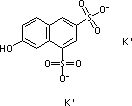
Tell us about your requirement

Price:
Quantity
Select Unit
- 50
- 100
- 200
- 250
- 500
- 1000+
Additional detail
Mobile number
Email

More Products in Reactive Dyes Intermediates Category
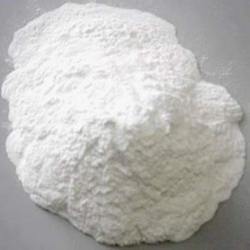
Aniline 25- Disulphonic Acid
Minimum Order Quantity : 25 Liters
Appearance : White Powder
Physical Form : Powder
Purity(%) : 98%
Type : Other, Acid
Grade : Industrial Grade
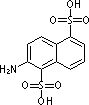
Sulfo Tobias Acid
Appearance : Light brown powder
Physical Form : Powder
Purity(%) : 99%
Type : Other, Acid Dye Intermediate
Grade : Industrial Grade
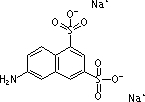
Amino Iso G. Acid
Appearance : White crystalline powder
Physical Form : Solid
Purity(%) : 98%
Type : Other, Amino Acid
Grade : Other, Technical Grade
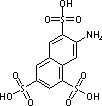
B-Naphthyl Amine-3-6-8 Trisulphonic Acid
Minimum Order Quantity : 25 Liters
Appearance : White to light yellow powder
Physical Form : Other, Solid powder
Purity(%) : 99.5%
Type : Other, Chemical compound
Grade : Other

Our Associate Concern
Everest Intermediates
Plot No. 706, 707 & 709, Road No. 7
GIDC Estate, Sachin, Dist. Surat-394230
Phone: 91-261-2453000/2433303
Everest Intermediates
Plot No. 706, 707 & 709, Road No. 7
GIDC Estate, Sachin, Dist. Surat-394230
Phone: 91-261-2453000/2433303
Contact Details
HIMALAYA CHEMICALS
GST : 24AABFH4920P1ZA
GST : 24AABFH4920P1ZA

- Shed No. C-1, B-3/4, Plot No. 24 & 25, G.I.D.C Estate, Pandesara,Surat - 394221, Gujarat, India
- Phone : 08045802072

- Mr Natubhai D Patel (Partner)
- Mobile :08045802072
- Send Inquiry
 Send Inquiry

HIMALAYA CHEMICALS
All Rights Reserved.(Terms of Use)
Developed and Managed by Infocom Network Private Limited.
Developed and Managed by Infocom Network Private Limited.

